
Demand
Forecast Intelligence: turn your historical data into a forecast for free
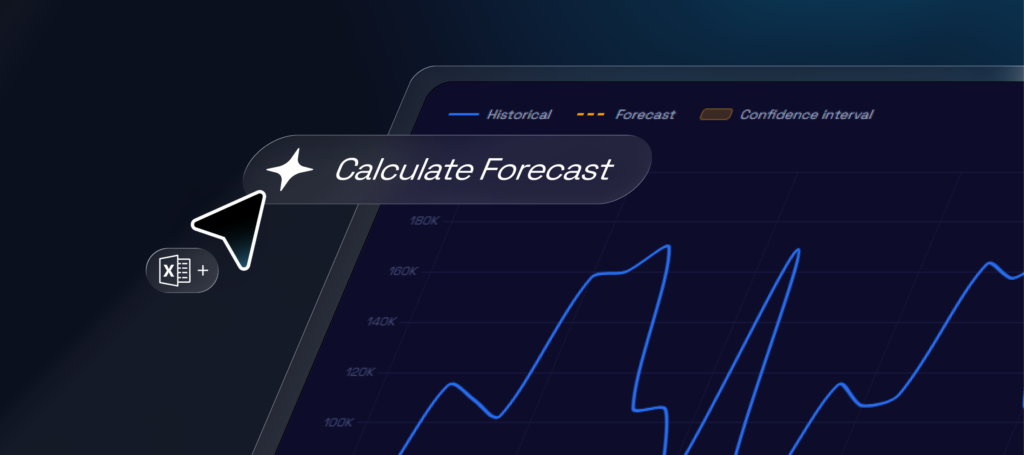
Forecast Intelligence is a free web tool that lets you generate a demand forecast from your historical data. Its purpose is to help you understand how demand behaves, spot patterns and get an initial forecast estimate without relying on complex manual processes.
To get started, upload a CSV file with your demand history. At a minimum, the file should include a date column, a product or product–customer column and a quantity column. You can also include value if you want to analyse the forecast from a financial perspective.
Once the file is uploaded, choose the type of forecast you want to calculate. Most teams work in units, but you can also run it in value if you want to analyse the commercial trend of demand.
Next, define the analysis frequency. You can group the data monthly or weekly, depending on the level of detail you need. After that, set the forecast horizon by selecting how many months or weeks you want to project.
Then choose the level of analysis. You can generate a total forecast for the business, analyse it by product or go one level deeper by product–customer. If you work with a large number of SKUs, we recommend starting with an aggregated view and drilling down afterwards.
After that, select the forecasting method. A linear trend works well for series without clear seasonality. A seasonal method is recommended when you have repeating patterns. Exponential smoothing gives you a more flexible forecast and confidence intervals.
Once you run the calculation, the tool will display your historical data and forecast in a chart. The solid line represents the historical data, while the dotted line shows the generated forecast. You can also toggle products on or off, adjust parameters and recalculate to compare different scenarios.
As a result, you’ll get an initial demand forecast that helps you visualise trends, spot meaningful behaviours and make decisions on a clearer, more structured basis.