
Safety Stock: What It Is, Why It Matters and How It Impacts the Supply Chain
- Updated
- March 11, 2026
- Reading time
- 13 min read

Safety stock is one of the most familiar concepts in inventory management and also one of the most misapplied. It’s meant to protect service levels when uncertainty hits. However, when it’s set without context or treated as a fixed number, it can quietly drive extra cost, tie up working capital and push teams into the wrong operational decisions.
In this article, we’ll break down what safety stock really is, why it exists, when it adds value and when it starts creating problems. We’ll also cover how it affects OTIF, margin and planning and why it should be handled as a business decision within a broader planning system, not just as an operational “cushion.”
What Safety Stock Is and Why It Exists in Planning
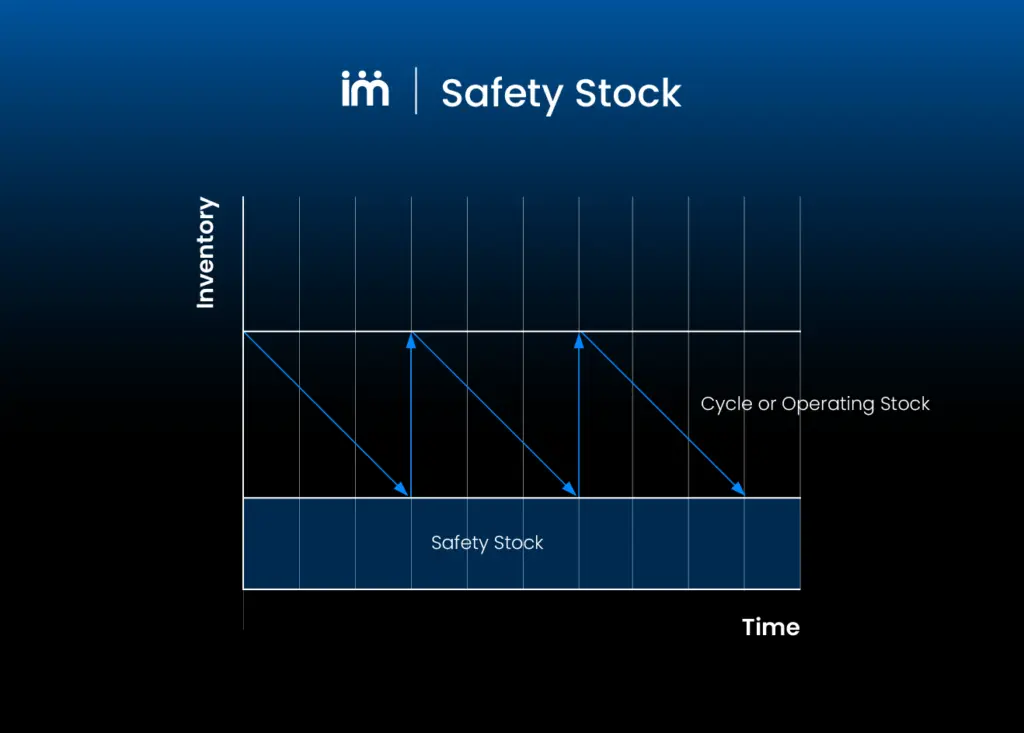
Safety stock is the extra inventory you hold to absorb the gap between what you plan and what actually happens. It exists because uncertainty is real: demand swings, supplier delays and planning errors all happen.
That said, whether it helps or hurts depends on how you set it and what risk it’s meant to cover. Understanding its purpose is the only way to keep it as protection, not turn it into a structural issue.
The Real Purpose of Safety Stock
Safety stock isn’t about “carrying more inventory.” It’s about protecting service levels from variability. It acts as a buffer that helps you meet commitments even when demand or supply doesn’t behave the way you expected.
When it’s sized correctly, it reduces stockouts and cuts down on expediting. When it’s poorly defined, it just masks planning problems and shifts risk into inventory. That’s why you should always evaluate it in the context of the whole system, not as a standalone number.
Which Issues It’s Meant to Prevent in the Supply Chain
Safety stock is mainly intended to prevent three things: stockouts, service failures and last-minute firefighting. Without a buffer, any deviation can trigger stoppages, urgent orders or lost sales.
Still, protecting the system with inventory comes at a cost. The goal isn’t to eliminate risk. It’s to manage it deliberately and balance protection with efficiency.
How Safety Stock Is Calculated
Historically, safety stock has been calculated with relatively simple formulas. These methods can still be useful in the right environment, but it’s important to understand what assumptions sit behind them and where they stop working.
Before you apply them, you need to know both the mechanics and the limitations.
Basic Safety Stock Formula
Safety stock is typically calculated using either a basic method or a statistical one. The first relies on a simpler formula. The second adds variables such as service targets and variability.
The simplest way to calculate safety stock is:
Safety stock = (Maximum lead time – Average lead time) × Average demand
There are other methods that factor in elements like target service level and demand standard deviation, but the formula above is the most basic.
For a statistical approach, you’d include additional variables. A common formula is:
Safety stock = Z × σ × √LT
Where:
- Z is the target service level.
- σ is the standard deviation of demand.
- LT is lead time.
This version is designed to cover statistical deviations within a defined confidence level.
What This Formula Assumes and Why It Works in Simple Environments
This approach assumes demand is fairly stable, lead time doesn’t fluctuate much and historical behavior is a good proxy for the future. In simpler environments with low variability and a manageable number of products, it often produces acceptable results.
The problem starts when those assumptions don’t hold. Large portfolios, intermittent demand and frequent mix shifts quickly make the calculation unreliable.
Practical Example of a Safety Stock Calculation
Assume average daily demand is 100 units, standard deviation is 20 units, lead time is 10 days and the target service level is 95% (Z ≈ 1.65).
Safety stock would be:
1.65 × 20 × √10 ≈ 104 units
That number may look “precise” but it’s only as accurate as the stability of the context. In real operations, that stability rarely lasts.
Limitations of Traditional Safety Stock Calculation
Traditional it is static and backward-looking. It doesn’t account for changes in demand behavior, external signals or future planning decisions. It also treats products with very different patterns as if they face the same risk.
As a result, many businesses run with safety stock levels that no longer reflect real exposure, which leads to excess inventory or a false sense of control.

When Safety Stock Adds Operational Value
Safety stock is still a valid tool when it’s used in the right context. The concept isn’t the problem. The issue is applying it without judgment.
Knowing when it adds value matters just as much as knowing when it stops doing so.
Environments Where Safety Stock Is Necessary
Safety stock delivers the most value when responsiveness is limited and variability can’t be absorbed easily through other levers. For example, when lead times are long or unreliable, when production constraints can’t be adjusted quickly or when supplier flexibility is low.
It’s also especially relevant when the cost of a stockout is high, whether that’s due to customer impact, contractual penalties or downstream production disruptions. In these cases, well-sized safety stock protects execution and prevents expensive instability.
The key is making sure the buffer matches the real risk. When it’s tied to a specific need and reviewed often, it reduces friction, improves stability and supports better execution without turning into structural waste.
How Safety Stock Affects OTIF and Service Reliability
Safety stock directly impacts OTIF (On Time In Full) because it increases the likelihood you can deliver in full and on time, even when demand or supply deviates. In that sense, it protects customer commitments.
However, the relationship isn’t automatic. A high OTIF sustained mostly through excess stock often hides planning issues and creates the illusion of reliability. Service looks better in the short run, but over time the side effects show up: overstocks, hidden expediting and margin pressure.
True reliability comes from using it to cover the right risk, not from using inventory as a band-aid. When safety stock is sized correctly and connected to forecasting, inventory and planning, OTIF improves sustainably. When it isn’t, OTIF stays artificially high at the expense of efficiency and profitability.
When Safety Stock Starts Creating Problems
Safety stock stops being a solution when it becomes a substitute for planning discipline. At that point, it creates more issues than it solves.
Spotting that inflection point is critical if you want to avoid expensive “stock inertia.”
Excess Inventory and Tied-Up Capital
Oversized safety stock ties up capital that could be used elsewhere: growth, investment or debt reduction. Beyond the inventory value itself, it also adds recurring costs for storage, handling and insurance and it increases the risk of obsolescence and deterioration.
The financial impact often gets lost in day-to-day operations. Many organizations accept excess stock as “the price of good service” without quantifying how much capital they’re sacrificing or whether the trade-off matches the risk being covered. When safety stock isn’t tied to real variability, it becomes a defensive move that protects the short term but penalizes overall efficiency.
Over time, tied-up capital reduces flexibility and limits strategic options. Inventory stops being an operational asset and becomes a quiet financial drag.
A False Sense of Operational Security
Too much stock often feels like safety, but it can be misleading. When inventory seems abundant, forecasting, procurement and planning issues feel less urgent. They don’t go away. They just get hidden behind the buffer.
That delay prevents root-cause fixes. Instead of improving forecast quality, adjusting procurement policies or redesigning planning, inventory becomes the layer that absorbs the errors. When the environment shifts (demand swings, supplier disruption or mix changes), the system fails again but now the consequences are larger.
What once felt reassuring becomes rigidity. The organization ends up with service problems and inventory it can’t absorb at the same time, which multiplies the cost of reacting. Real security doesn’t come from holding more stock. It comes from managing risk better through planning.

The Core Safety Stock Trade-Off: Service vs Cost
Safety stock is one of the classic supply chain trade-offs. Protecting service means accepting cost. Reducing cost increases risk.
The goal isn’t choosing an extreme. It’s managing the balance intentionally.
More Stock Doesn’t Always Mean Better Service
Increasing safety stock typically improves service only up to a point. Past that point, the OTIF or availability gains get smaller and smaller while carrying costs keep rising linearly or even faster. That’s the classic zone of diminishing returns.
This saturation point is easy to miss when safety stock is set once and never revisited. Without a structured view of real risk, companies often add inventory automatically after any service incident, without checking whether the increase produces meaningful improvement or simply adds inefficiency.
The result is a planning model that looks “safe” but is oversized. Service stays stable, yet it doesn’t improve in proportion to the financial effort, which usually means the real constraint is planning quality, not stock level.
How Safety Stock Impacts Margin and Profitability
The impact of safety stock goes far beyond the warehouse. Every additional unit ties up capital and affects margin, ROCE and the ability to invest in strategic initiatives. This isn’t just a logistics cost issue. It’s about overall financial performance.
When safety stock is oversized, the business absorbs a recurring financial cost that rarely gets attributed back to planning decisions. That distorts profitability by product, customer or channel and can drive commercial decisions based on theoretical margins that ignore the cost of capital.
That’s why safety stock shouldn’t be set as an operations-only parameter. It belongs in the financial and strategic conversation, weighing service level, risk exposure and expected profitability. Done right, safety stock becomes a value lever instead of a silent drag.
Safety Stock Within the Planning System
Safety stock doesn’t work in isolation. It’s one variable inside a system that links demand, procurement, production and inventory.
Setting it without that end-to-end context is one of the most common mistakes.
The Role of Safety Stock in Demand, Procurement and Production
Safety stock doesn’t operate independently. It directly shapes how demand, procurement and production get planned. A high safety stock target increases replenishment volumes, pulls buying decisions forward and changes production load, even when real demand doesn’t justify it. In other words, safety stock becomes a quiet driver of the plan.
From a procurement standpoint, oversized safety stock often turns into larger orders, less frequent ordering and more rigid supplier commitments. In production, it pushes bigger batches, less flexibility and weaker responsiveness to demand or mix changes. All of this reduces agility and increases the risk of obsolescence.
If demand, procurement and production aren’t aligned on risk and target service levels, safety stock stops being a buffer and becomes a destabilizer. Instead of absorbing variability, it amplifies it through the chain, creating inefficiencies that aren’t always obvious right away.
Why It Shouldn’t Be Set Without Planning Context
The same safety stock level can be appropriate in one situation and completely inefficient in another. Changes in forecast, product mix, lead times or production capacity directly change the risk safety stock needs to cover. Ignoring that context creates rigid decisions that become outdated fast.
Setting safety stock without an end-to-end planning view assumes a stable environment, but in practice stability is the exception. Variability, operational constraints and commercial strategy shifts mean a fixed number quickly stops representing the right level of protection.
That’s why safety stock should be treated as a planning-system-dependent variable, not a standalone setting. When it’s defined based on scenarios, service policies and real capacity constraints, it can do its job without distorting the plan or creating unnecessary cost.
Why Treating Safety Stock as a Fixed Value Is a Risk
One of the biggest flaws in the traditional approach is assuming risk stays constant. In reality, variability changes all the time.
Keeping safety stock unchanged in a dynamic environment is a reliable way to build inefficiency.
Variability Changes and So Does Risk
Demand evolves, lead times fluctuate and market conditions shift. Risk is never static.
If safety stock isn’t adjusted, it stops reflecting reality and loses its protective value.
The Limit of the Traditional Approach
The traditional approach holds up only when the operating environment stays stable. When it doesn’t, the model breaks.
That’s when many organizations start questioning whether their safety stock practices are still fit for purpose.

When Traditional Safety Stock Is No Longer Enough
In high-variability environments, with broad portfolios or frequent demand shifts, traditional safety stock shows its limits.
The objective isn’t to remove safety stock. It’s to evolve how you manage it.
When It Makes Sense to Move to Dynamic Safety Stock
It makes sense to shift when risk changes quickly and a static approach leads to repeated overstocks or stockouts. This is where more advanced, AI-supported models come in, adjusting safety stock based on actual conditions.
Instead of relying on fixed values, protection scales with current risk. If you want to go deeper, we cover this in detail in our guide to dynamic safety stock.
Safety Stock as a Business Decision and a Risk Management Tool
The real maturity shift happens when safety stock is managed as a business decision, not just a technical parameter.
At that point, it becomes part of overall risk management.
Impact on Tied-Up Capital and Decision-Making
Every unit of safety stock is capital that can’t be used elsewhere. It’s not only a logistics cost. It’s a financial allocation that impacts cash flow, return on capital employed and investment capacity. When that impact isn’t visible, safety stock gets increased as if it were “free.”
Turning safety stock into an economic conversation changes everything. Discussing dollars tied up, annual financing cost or write-off risk helps prioritize which SKUs deserve protection, where you can accept risk and where continuing to accumulate inventory no longer makes sense. At that point, safety stock stops being technical and becomes executive-level decision-making.
This view also enables real comparison of alternatives. Changing inventory policies, accepting controlled stockout risk or investing in more flexibility can only be evaluated properly when the financial impact of safety stock is quantified.
Using Safety Stock as a Strategic Lever, Not a Patch
Safety stock becomes a strategic lever when it’s used to cover real risk and protect key commitments intentionally. In that model, inventory is the output of a conscious decision: what service level to offer, at what cost and where inventory is the smartest protection mechanism. Safety stock becomes part of system design.
The problem starts when it’s used as a patch. In that case, safety stock is increased automatically after stockouts, delays or service failures, without fixing root causes. Inventory masks forecasting, procurement or planning issues, but it doesn’t resolve them. It feels reassuring short term. Over time, it creates rigidity, extra cost and loss of control.
The difference between a lever and a patch comes down to proactive planning and cross-functional alignment. When demand, procurement, operations and finance share one view of risk and target service, safety stock is adjusted with judgment. Without that alignment, inventory becomes a substitute for decision-making and the system loses efficiency and stability.
Safety Stock Protects Service, but It Must Be Managed with Judgment
Safety stock remains a fundamental tool for protecting service levels in the supply chain, but its value isn’t in “having more.” It’s in understanding what risk you’re covering and what it costs. When safety stock is managed as a fixed number or treated as a universal solution, it creates inefficiency, ties up capital and builds a false sense of control. When it’s integrated into a coherent planning system, it becomes an effective way to absorb uncertainty without sacrificing profitability.
More mature organizations don’t use safety stock as an operational band-aid. They manage it as a deliberate risk decision. They measure its impact on OTIF, margin and working capital, review it based on context and connect it to demand planning, procurement and production. That’s how you balance service and cost sustainably, avoiding both stockouts and structural excess inventory.
At Imperia, we help organizations reach this level of maturity by integrating safety stock into an advanced, connected Supply Chain Planning model. Our software helps quantify real risk, anticipate change and make decisions based on data, not gut feel. If you’d like to see how to manage safety stock with judgment and turn it into a value lever for your business, request a free demo with our experts.
Related articles
 Inventory Management
Planned FEFO: how to prevent expiries, waste and stock-outs
Planned FEFO isn’t just about shipping the product that expires first. In companies managing perishable inven…
 Inventory Management
Inventory Types: How to Analyze Your Stock by Root Cause and Make Better Decisions
Inventory types only become useful when you analyze stock by root cause. In practice, the real issue is not h…
 Inventory Management
Why Your Inventory Keeps Creeping Up: The 5 Decisions Behind It
If you’ve been trying to bring inventory down for months and stock levels keep climbing back up, you probably…
 Inventory Management
Risk-Based Inventory Cover Policies: Set Target Cover Without Inflating Inventory
An inventory cover policy is one of those decisions that may look simple on paper but, in reality, determines…
 Inventory Management
Obsolescence Management in the Supply Chain: How to Anticipate It and Reduce Financial Impact
Obsolescence management in the supply chain has become one of the most significant silent challenges for many…
 Inventory Management
Advanced Strategies for Slow-Moving Product Management in the Supply Chain
Slow-Moving Product Management is one of the most complex, and often least visible, challenges in supply chai…
Subscribe to our newsletter and transform your management!
Receive updates and valuable resources that will help you optimize your purchasing and procurement process.